

4 C's of a diamond
- asteriadiamondjewe
- Nov 20, 2024
- 2 min read

Updated: Feb 4, 2025
Welcome to the Ask Asteria session where you ask and we answer all about diamonds and jewellery. Today we're going to talk about the infamous 4 C's of a diamond that plays a major role in jewellery shopping.
Before beginning any diamond journey, it’s important to get an understanding of what they are: Color, Cut, Clarity and Carat. Here’s our insights to get you ready for your diamond expedition.
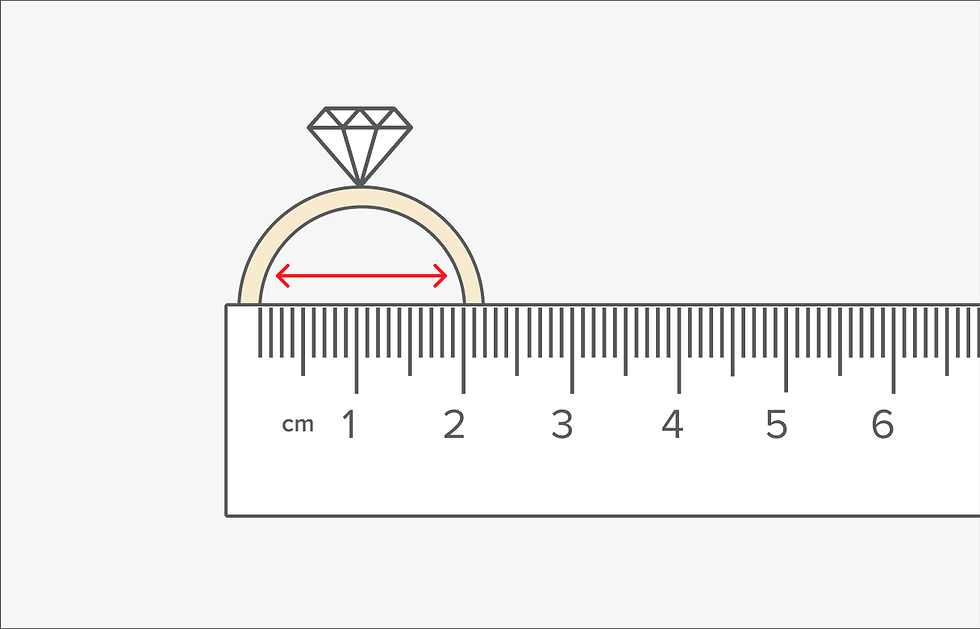
Carat weight: Basically, the weight of the diamond. Most people associate the Carat weight with the largeness of a diamond. But the dimensions play a huge factor to determine the look of the diamond.
Color: measures a diamond’s absence of colour. The less colour in a diamond, the more desirable and valuable it is. This is because most colourless or white diamonds actually contain trace amounts of yellow, brown or gray colour. There are 23 colour grades on D to Z scale, with D meaning that the diamond has no detectable colour at all and Z meaning hint of colour shade in the diamond. Any diamond beyond Z colour grade is considered as fancy diamond and is evaluated on a different colour scale.
Clarity: is the natural inclusions found inside or on the surface of the diamond. It is graded by the number, position and the intensity of the inclusions. It starts at flawless (FL), internally flawless (IF), very very slightly included 1 and 2 (VVS1 and VVS2), slightly included 1 and 2 (SI1 and SI2), included (I1, I2, I3). We usually stay within SI2 and up range making sure that none of the inclusions are visible to the naked eye. If you are looking for a diamond with steep cuts (like an emerald cut) you would want to prioritise Clarity a bit more than you would for a brilliant cut.
Cut: diamonds are known for their ability to transmit light and sparkle so intensely. We often associate cut as shape (round, heart, oval, marquise, pear) but what diamond cut actually does mean is how well a diamond facets interact with light. Cut grades start are excellent, then very good, good, fair and poor. You have only cut grading for round diamonds as they have standard proportions. Rest shapes like emerald, cushion and radians (fancy shapes) have polish and symmetry with the same excellent to poor grade. Antique cuts tend to be in lower quality grades but that is what gives them unique charm.
Those are the 4 C’s : Carat, Colour, Cut and Clarity of a diamond. Let us know what you want us to cover next in comments below.
Ready to start designing your dream engagement ring with us? Book a call here. Want to shine this festive season? Shop our curated collection with natural and sparkly diamonds here.


Comments